Micro-LED vs QDEL vs QD-OLED: Self Emissive Tech Comparison
While the industry debates whether micro-LED will replace OLED, a new self-emissive display technology called QDEL has entered the scene, aiming to challenge all existing display types head-on.
What is QDEL?
QDEL, or Quantum Dot Electroluminescent, is a display technology in which quantum dots serve as the main light-emitting source.
Electrical energy directly excites the quantum dots to generate light, removing the need for any organic material or a backlight.
This is fundamentally different from QLED, which relies on conventional LED backlighting.
QDEL is synonymous with ‘NanoLED’, the term used by Nanosys, a company that produces quantum dots for display applications.
QDEL vs QLED vs QD-OLED
While all the above mentioned display technologies use quantum dots, hence the letter ‘Q’, they employ them in distinctly different ways.
In a QLED TV, a blue LED backlight illuminates a layer of red and green quantum dots which convert it into highly pure red and green colors.
This, combined with the source blue light, produces bright images with a wide color gamut.
In a QD-OLED display, the quantum dot layer sits directly above an OLED layer.
The organic OLED emitters generate blue light, which the quantum dots convert into red and green, while the remaining blue light passes through.
This results in accurate RGB color reproduction across the display.
On the other hand, in a QDEL display, quantum dots themselves function as the primary light source.
An electric current directly excites the quantum dots, enabling them to emit light on their own.
Unlike QLED and QD-OLED, which rely on an LED backlight and organic OLED emitter respectively, QDEL does not require any additional light-emitting layers.
What is micro LED?
In a micro-LED display, there’s no need for a quantum dot layer, or an LED backlight, or an organic light-emitting material.
Instead, micro-LED TVs use tiny inorganic LEDs that are self-emissive.
Each microscopic red, green, and blue LED itself functions as a subpixel, directly producing light on its own.
While QDEL, QD-OLED and micro-LED are all self-emissive display technologies capable of delivering true blacks, but each operates on a fundamentally different principle.
How do QDEL and QD-OLED compare to micro-LED?
As discussed, micro-LEDs TVs use inorganic LEDs as the subpixels themselves, with each one emitting light independently.
In QD-OLED displays, blue organic LEDs serve as the light source, energising quantum dots to produce red and green light.
In contrast, the more futuristic QDEL tech applies electrical current directly to quantum dots, allowing them to act as the primary light emitters.
That being said, let’s draw a brief comparison between what each of these display technologies has to offer.
Contrast
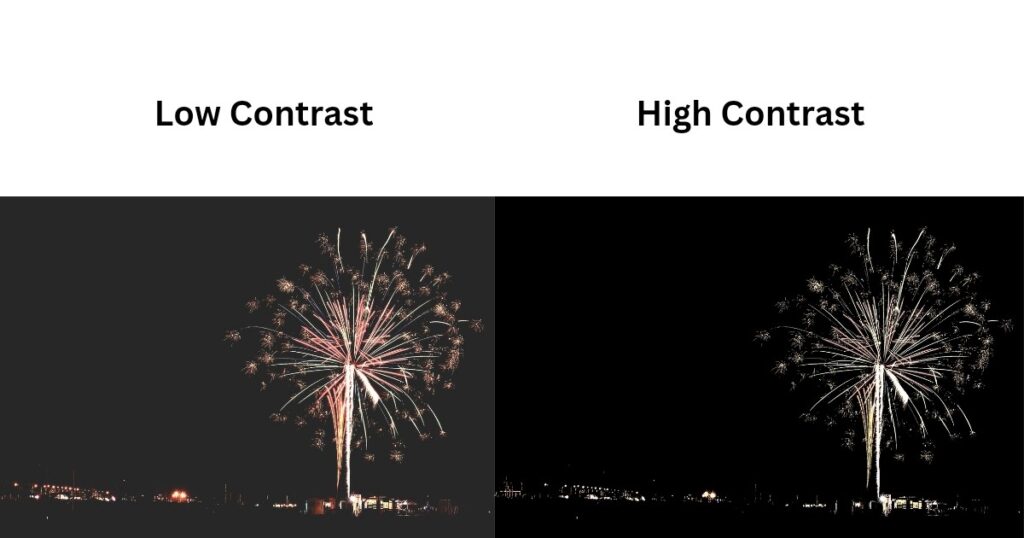
All three displays are capable of producing true blacks as they use self-emissive pixels.
The ability to achieve infinite contrast with deep, pitch-black levels and thereby bring an image true to life, is what has driven the development of these cutting-edge technologies.
Micro-LEDs and QDEL displays are expected to offer even better contrast than other display technologies, as they support a very high number of brightness levels.
OLEDs too have infinite contrast ratio, however, in QD-OLED displays, black levels can rise in brightly lit environments due to ambient light, which can negatively impact perceived contrast.
Brightness
All of these technologies are capable of reaching very high peak brightness.
QD-OLEDs and MLA (Micro Lens Array) OLEDs are among the brightest OLEDs, reaching peak brightness of several thousand nits.
Micro-LEDs and QDEL displays can even surpass those levels, exceeding 100,000 nits!
For devices like smartwatches or smartphones, high peak brightness is crucial for visibility in daylight.
While many of them use OLEDs as of now, driving them to such high brightness can risk pixel degradation over time.
Micro-LEDs, on the other hand, can handle extreme brightness without pixel damage, but they tend to be very expensive.
Meanwhile, QDEL technology is expected to offer a balance between cost and brightness, making it a strong contender to dominate the future display market.
Colors
QDEL is expected to have a purer and wider color space than QD-OLED and micro-LED, perhaps because, in QDEL technology, quantum dots directly emit pure primary red, green, and blue light.
In QD-OLED displays, a small amount of light energy loss can occur when blue light excites the red and green quantum dots.
Moreover, the organic pixels can’t be driven too hard due to the risk of their degradation.
Meanwhile, micro-LED rely on red, green, and blue LED emitters, whose output might not be as spectrally pure as that of quantum dots.
As a result, QDEL displays, where the emitters are quantum dots themselves, can produce extremely pure, monochromatic RGB colors, enabling a more accurate, wider, and purer color space.
Efficiency
Since quantum dots are directly energized in QDEL technology, it is expected to be more efficient than QLED or QD-OLED displays, where quantum dots are excited indirectly.
As a result, QDEL should process visuals more efficiently and consume less power.
The same advantage applies to micro-LED as well, which is also known for its high energy efficiency.
Durability
Micro-LEDs are the most durable of the three technologies because they use inorganic pixels.
In contrast, the organic blue LEDs in QD-OLEDs and blue quantum dots in QDELs tend to have shorter lifespans.
Since blue light sits at the high-energy end of the spectrum, it requires more energy for its emission, which can accelerate pixel degradation in both QD-OLED and QDEL displays.
That being said, refinements in blue QDs should steadily improve their longevity, which must make QDEL displays increasingly durable over time.
Future display tech: QD-OLED, micro-LED or QDEL?
Unlike the intricate and costly manufacturing process of micro-LEDs, QDELs can be produced using methods similar to traditional OLED and LCD fabrication, making them significantly more affordable.
They are expected to offer many of the advantages of micro-LEDs, including ultra high peak brightness and a potentially wider and purer color gamut.
Moreover, the lifespan of blue emissive quantum dots used in QDELs is expected to exceed that of the blue organic emitters used in QD-OLEDs and be comparable to LCDs.
With its direct-view quantum dot approach, QDEL should deliver an all-in-one package of an ideal display at a more accessible cost, and thus, could become the mainstream display technology in future.
Limitations of QDEL
Blue quantum dots have a shorter lifespan compared to red and green quantum dots, and improving their longevity is crucial for enhancing the overall durability of QDEL displays.
So far, Sharp Display has showcased two QDEL prototypes at CES, a 12.3-inch and a 30-inch model, which indicates that the technology could eventually be applied to a wide range of displays of various sizes like laptops, smartphones, TVs, and monitors.
However, QDEL is not yet part of the regular consumer production line and may take a few years before it gains widespread market adoption.
Could micro-LED and QDEL co-exist?
Since QDEL is expected to combine most of the advantages of micro-LED displays, with additional benefits like richer colors and lower cost, it has the potential to dominate the display market in the future.
Currently, however, the lifespan of QDELs may not match that of micro-LEDs.
In short, if micro-LED becomes more affordable and the longevity of QDEL reaches the level of LCDs, both technologies could co-exist, potentially replacing OLED entirely.
On the other hand, if micro-LED remains significantly more expensive than QDEL, consumer preference may shift largely towards QDEL displays.