
Samsung Neo QLED vs QD-OLED: Which quantum dot TV is better?
Neo QLED and QD-OLED TVs are often compared, as both deliver stunning visuals and are equipped with cutting-edge display technologies.
While they share quantum dots in common, the underlying technologies are fundamentally different.
Neo QLED is a significant advancement over traditional LED TVs, incorporating mini LED backlighting and quantum dot filters for improved brightness and contrast.
On the other hand, QD-OLED represents a major leap over conventional OLED, combining self-emissive OLED pixels with quantum dots to enhance color and brightness.
Let’s first briefly understand how each technology works. Then we’ll dive into a detailed performance comparison.
What is Neo QLED?
Neo QLED, a term exclusively used by Samsung for its premium mini LED TVs is essentially a QLED TV that uses a mini LED backlight.
A Neo QLED TV is a type of LCD TV that combines a mini LED backlight with quantum dot technology.
The light from the mini LEDs passes through a quantum dot layer, where the quantum dots emit precise, pure colors based on their size.
The use of mini LEDs allows for the creation of thousands of local dimming zones, which can dim or brighten independently based on the content on screen.
This is a major improvement over conventional LED-LCD TVs, which typically have only a few dozen dimming zones.
As a result, Neo QLED TVs offer much more precise control over brightness, delivering significantly higher contrast ratio and deeper blacks than standard LED TVs.
Additionally, the integration of quantum dots in place of traditional RGB color filters enhances color purity and enables a much wider color gamut, resulting in more vibrant and accurate color reproduction.
What is QD-OLED?
A QD-OLED TV is a display that combines Quantum Dot and OLED technologies to deliver enhanced picture quality.
The OLED panel uses blue OLED emitters as the light source.
These emitters shine light onto a layer of quantum dots, which then convert the blue light into pure red and green colors.
Samsung, Sony, and a few other brands use QD-OLED panels, mainly sourced from Samsung Display.
QD-OLED TV is an OLED TV that replaces the traditional WRGB color filters (used in WOLEDs) with quantum dots to improve brightness and color performance.
It uses millions of self-emissive organic LEDs, with each pixel individually lit.
Since the OLED emitters are built directly into the display, no backlight is required.
This allows for pixel-level control, enabling each pixel to turn on or off independently.
As a result, QD-OLED TVs achieve perfect blacks and infinite contrast.Unlike WOLEDs, which use a white OLED light source and color filters (WRGB), QD-OLEDs use a blue OLED light source.
This blue light passes through a quantum dot layer that converts it into pure red and green.
This process eliminates the need for color filters, preserving light intensity and resulting in higher brightness and more accurate colors than conventional OLEDs.
Neo QLED vs QD-OLED: What’s the difference?
Contrast
A QD-OLED TV doesn’t require a backlight because it uses self-emissive pixels.
Each pixel generates its own light and can turn off completely.
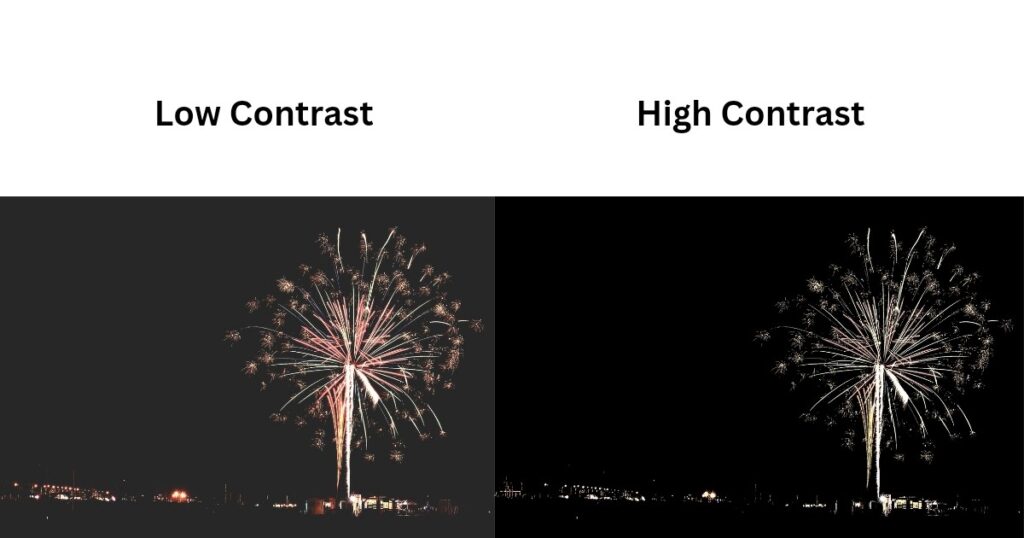
This allows QD-OLEDs to produce perfect blacks and achieve an infinite contrast ratio.
Since there’s no backlight, there’s also no blooming around bright objects, making the picture quality exceptionally crisp and lifelike.
In contrast, a Neo QLED TV uses a mini LED backlight with advanced local dimming.
This allows it to deliver much better blacks and contrast compared to regular LED TVs.
However, since it still relies on a backlight, some light can bleed into darker areas of the screen, resulting in minor blooming around bright objects on dark backgrounds.
While the contrast is very impressive, it doesn’t exactly match the pixel-level precision and black depth of a QD-OLED TV.
Viewing angles
A QD-OLED TV offers the widest viewing angles since each pixel emits its own light and operates independently.
Whether it’s at the center or the edges, the brightness, color accuracy, and contrast remain consistent from virtually any angle.
Whether you’re sitting directly in front of the TV or off to the side, the picture quality appears uniform and vibrant.
Neo QLED TVs also provide good viewing angles, thanks to a high number of local dimming zones.
However, since they still rely on an LCD panel and backlighting, some loss of contrast and color shift may occur when viewed from extreme side angles.
That said, in practical use like sitting anywhere on a typical couch, the viewing angles are generally more than sufficient.
Response time
A QD-OLED TV offers an almost instantaneous response time of around 0.1 milliseconds.
Since its self-emissive pixels can switch on and off independently and instantly, they can change color without delay.
This makes QD-OLED TVs ideal for fast-paced gaming and high-action movies, delivering fluid motion with virtually no motion blur or ghosting.
On the other hand, a Neo QLED TV still relies on a mini LED backlight to illuminate its pixels.
Because of the extra step involved in transmitting light from the backlight through the LCD layer, its response time is typically around 1 ms or slightly more.
While this is still fast enough for regular content like movies or TV shows, in ultra-fast gaming scenarios, you might notice some motion blur, slight ghosting, or screen tearing.
HDR performance
Both QD-OLED and Neo QLED TVs use quantum dots to achieve a wide color gamut, resulting in vibrant and accurate colors.
Thanks to their high peak brightness, both also achieve a large color volume, which when combined with excellent contrast, enables superb HDR performance.
However, in bright rooms, a Neo QLED TV tends to perform better. Its mini LED backlight can become highly bright, making it easier to overcome glare and reflections.
QD-OLED TVs, while also capable of handling glare and delivering much brighter images than traditional OLEDs, are still limited by the risk of organic pixel degradation.
This means they can’t push brightness to the same extent as Neo QLEDs, although they still outperform standard OLEDs in bright environments.
Neo QLED vs QD-OLED: Which one is better?
A QD-OLED TV delivers infinite contrast and pure blacks with zero blooming, thanks to its self-emissive pixel technology.
It offers the widest viewing angles, ensuring the picture quality remains consistent no matter where you’re seated.
With a near-instantaneous response time, it’s perfect for fast-paced gaming, eliminating motion blur and ghosting.
It also supports a very wide color gamut, and in dim or dark rooms, its performance is truly unmatched.
The combination of deep blacks with high color volume results in vibrant, lifelike, and highly accurate colors.
While a Neo QLED TV is also an excellent performer, it lags slightly behind QD-OLED in most of these areas such as contrast, viewing angles and response time.
However, its strength lies in brightness. With a powerful mini LED backlight, it can reach higher peak brightness, making it better suited for bright or sunlit rooms, where it handles glare and reflections more effectively than a QD-OLED.
Neo QLED vs QD-OLED: Which TV to buy?
In conclusion, a QD-OLED TV outperforms a Neo QLED TV in most key areas such as contrast, black levels, response time, viewing angles, and overall picture quality.
However, there’s a catch: Neo QLED TVs are generally more affordable.
Since the differences, while noticeable, are not massive for most of the viewers, a Neo QLED TV can still be a great choice if you’re looking to save some money and need a TV that handles bright rooms really well.
But if your priority is top-tier image quality, gaming, or cinematic experiences, and you’re willing to spend more, then a QD-OLED TV is the better overall option.
Have you ever considered publishing an ebook or guest authoring on other blogs? I have a blog based on the same information you discuss and would really like to have you share some stories/information. I know my audience would value your work. If you’re even remotely interested, feel free to shoot me an email.
Surely friend when I get time.. but currently I am too working on improving my knowledge and blog.. thanks again and plz keep visiting 😅