Have you ever wondered how many colors together make the images you see on your TV?
From the rich red color of a parrot’s beak to the vibrant green of its feathers, how does your screen produce such stunning shades?
The idea behind it is actually pretty simple—and pretty fascinating!
In this article, we’ll explore how a TV creates all those yellows, blacks, whites, and more.
So let’s begin with the basics of how each TV pixel works.
What is a pixel in a TV?
The TV screen that you see is made of several tiny pixels or picture elements.
A pixel is the smallest element of a TV screen.
It is any one of the millions of such elements which together form the display.
Subpixels: TV’s color pixels
Each tiny pixel on your screen is made up of three even tinier subpixels, each responsible for emitting a particular colour of light, often either red, green or blue.
Now, can you guess how you see a white color on a TV?
Red, green and blue, these three colors combine together to create the color white on a TV screen.
In short, the subpixels are intricately controlled by the TV’s electronic circuitry, which meticulously regulates their intensities to produce the full spectrum of colours that we see on the display.
With that being said, let’s discuss in detail how these subpixels achieve this feat of color reproduction on TV.
How are colors reproduced on a TV screen?
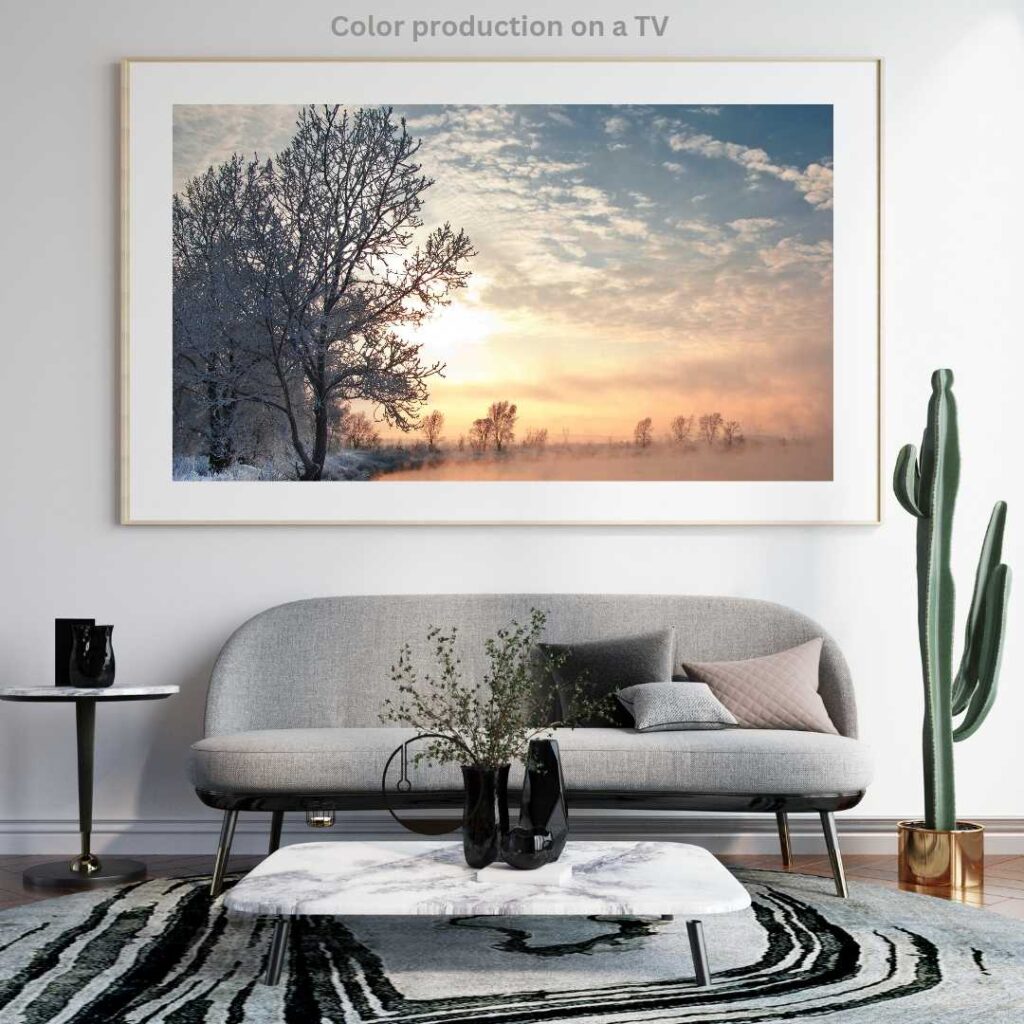
Instead of individually creating each native colour, the primary RGB subpixels (red, green, and blue) are used to generate the entire spectrum of colors.
Let’s unravel the fascinating logic behind how these subpixels are finely tuned to form the rich and varied palette of colours that grace our screens.
- When you see the colour blue on your screen, it’s because the red and green subpixels take a break while the blue subpixel goes all out, shining bright with full intensity. This team effort creates that beautiful blue hue you see.
- When displaying the colour cyan, the blue and green subpixels shine at their full intensity, while the red subpixel takes a break.
- When displaying the colour magenta, the green subpixel is switched off while the red and blue subpixels shine at their full intensity.
- Similarly, to display yellow, the blue subpixel is turned off while the red and green subpixels are made to glow at the full intensity.
- When all three subpixels are at full intensity, they combine to create a vibrant white color on the display. Conversely, when all three subpixels are turned off, the screen shows a deep, dark black color.
Thus, by controlling the intensities of the red, green, and blue subpixels, modern TVs can display millions and even billions of colours.
The more precisely these subpixels are controlled, the more detailed and vibrant the images on your TV screen are.
For example, OLED TVs can completely shut off their individual pixels, resulting in true blacks, while LED LCD TVs attempt to achieve a similar effect through local dimming.
Conclusion
In this article, we took a quick look at how a TV manages to produce colors like yellow, black, white, and more.
But the real magic behind all the other numerous color shades comes from something called color bit depth, which determines the total number of different colors a display can reproduce an image with.
FAQs
1. How does a TV create white color? Does it mean the absence of all colors?
No. White color can be understood as a combination of several colors. A TV creates pure white typically by combining pure red, green and blue colors.
2. How is yellow color produced on a TV?
To create the color yellow, the TV combines red and green subpixels at full intensities while keeping the blue subpixel completely off.